The last-mile encryption
problem is solved.
QuStream is the only system that extends one-time-pad-level security to every device on your network, not just the backbone. Mathematically unbreakable. No new hardware.





Most "quantum-safe" products
protect the wrong thing.
They protect the key exchange. The data in transit stays vulnerable.
Your data is being recorded right now
Nation-state actors are storing encrypted traffic today. When quantum computers arrive, everything they've collected becomes readable.
"Quantum-resistant" still has an expiry date
Post-quantum cryptography replaces one hard maths problem with another. Future algorithmic breakthroughs could break it; it offers no permanent guarantee.
Securing the handshake isn't enough
Most quantum security products protect the key exchange, the brief negotiation before data flows. The actual data in transit remains on standard encryption.
THE BREAKTHROUGH
A scalable one-time pad. Deployed in days.
A hardware device generates keys from quantum-physical processes, not algorithms. This randomness is the foundation of the security: it can't be predicted, modelled, or reverse-engineered.
- Quantum hardware entropy
- Not algorithm-generated
- Compatible with existing QKD
Architected for minimal data-plane cryptographic overhead
XOR-based OTP encryption avoids AES round-trip overhead. Structural latency advantages are architectural; they cannot be eliminated through silicon optimisation.
~4–6 ns structural latency floor at 100 Gbit/s
Architectural analysis, not empirical benchmark from deployed hardware. Assumes pad present at line rate.
Paper 5 (IACR ePrint preprint)1 XOR per byte: no round functions, no key schedule
OTP encryption is purely combinational. Structural advantage cannot be optimised away.
Paper 5, Section 5AES-GCM (hardware): 40–70 ns structural floor
Round-bound lower limit. Includes GHASH for integrity. Remains non-zero even as clock frequency increases.
Paper 5, Section 7.1Encryption Latency vs Security
Structural / architectural analysis, Paper 5 (IACR ePrint preprint, unreviewed)
Methodology: Latency values are structural/architectural bounds from Paper 5 ("QuStream-OTP: Structural Performance Advantages Over AES at Scale," IACR ePrint preprint, unreviewed). QS-OTP assumes pad present at line rate from Q-Block distribution. AES-GCM values include GHASH integrity computation. PQC figure represents Kyber-768 hardware decapsulation latency (IEEE benchmark). Comparison is between encryption operations, not full protocol stacks. These are architectural lower bounds, not empirical benchmarks from deployed hardware.
The Complete Picture
How QuStream compares across the metrics that matter to security teams.
| Metric | QuStream | AES + PQC | Traditional AES |
|---|---|---|---|
| Security Level | Information-theoretic Unconditional | Computational Hardness assumptions | Vulnerable Quantum-breakable |
| Data-plane operation | 1 XOR / byte Combinational, no schedule | Polynomial math + AES rounds High computational overhead | 10–14 rounds + GHASH Sequential dependency |
| SNDL / HNDL immunity | Inherent | Partial (assumed) | No |
| Integration | Overlay, days No protocol changes | Months | N/A |
| Methodology notes | Latency figures from Paper 5 structural analysis (IACR ePrint preprint, unreviewed). Architectural comparison, not empirical benchmarks from deployed hardware. QS-OTP comparison assumes data-plane encryption only; integrity handled by separate control plane. | ||
Want to understand how this applies to your specific infrastructure?
Book Technical BriefingWHO IT'S FOR
Built for industries where data can't expire.
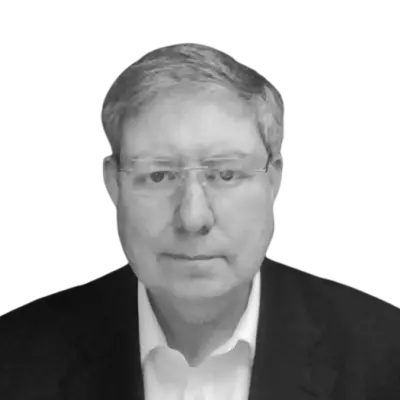

Adrian Neal, a two-time winner of the NATO Defence Innovation Challenge, is an internationally recognised Cybersecurity & Cryptographics expert, and currently holds the position of Senior Director and Global Lead for Post-Quantum Cryptography at Capgemini.
While primarily advising governments, defence organisations and global multi-nationals on post-quantum readiness, he is also a cybersecurity advisor regarding Central Bank Digital Currencies (CBDC), particularly in respect to the social and economic risks from future post-quantum cryptographic instability.
He is a graduate of Oxford University, from which he received a Masters' Degree in Software Engineering and began his career at IBM in the mid 80's, followed by a decade in the City of London, departing in '98 for Zurich to join UBS Warburg as their first Cryptographics expert while becoming a member of the International Association for Cryptologic Research (IACR).
In almost 40 years, he has held positions in key financial and industrial sectors such as Banking, Insurance, Financial Markets, Energy, Pharma, IT, Aviation and Telecoms, across 8 countries and over 3 continents.
In 2012, he founded the Oxford University spinout Oxford BioChronometrics, developing the most advanced software for detecting fraud in online advertising, winning various blind-tests against ad-industry incumbents, with the research being cited by the Guardian, the Financial Times, the Wall Street Journal and both (US) Houses of Congress, while becoming a winner of the 2017 NATO NCIA Defence Innovation Challenge for Advances in Cybersecurity, and subsequently published in European Cybersecurity Journal.
In 2018, he founded Oxford Scientifica as a research organisation, focused on advanced military communications in low-bandwidth and spectrum-contested environments, becoming a winner of the 2019 NATO NCIA Defence Innovation Challenge for Signal Resilience in the High North.
Research foundation
Key publications
Beyond Shannon: OPS as a Generalised ITS Model
IACR PreprintIACR ePrint 2025/1716
Formal OPS framework: bounds adversarial success probability to ≤ 2⁻ᵗ, independent of computing power. Generalises Shannon perfect secrecy to structured real-world traffic.
View paperQ-Stream: A Practical System for Operational Perfect Secrecy
PublishedFTC 2025, Munich, Springer LNNS
The only peer-reviewed QuStream publication. Describes Q-Blocks, DFKs, the forward-linked key chain, and Master/Proxy-Node architecture.
View paperQuStream-OTP: Structural Performance Advantages Over AES
IACR PreprintIACR ePrint, unreviewed preprint
18-dimension architectural analysis. Structural latency floor: ~4–6 ns (QS-OTP) vs 40–70 ns (AES-GCM hardware). Architectural comparison, not empirical benchmark.
View paperThe encryption that doesn't
have an expiry date.
QuStream protects your data from threats that don't exist yet, running on the infrastructure you already have. Talk to us about your network.